Sensing Climate Mural in Glasgow
By Rebecca Yeo and Sarah Bell
On Friday 6th March 2026, we celebrated the opening of two new Sensing Climate murals at the wonderful Greater Easterhouse Supporting Hands (GESH) centre in Glasgow.
Over the last few months, we have been working with people in Glasgow who are disabled, neurodivergent and/or living with long-term health conditions. People contributed images and ideas to highlight key messages about what needs to change to build fairer communities in response to the climate crisis.
Artist, Andrew Bolton of Community Murals CIC, put these ideas together to create two mural designs, which were refined in collaboration with all those involved.
The murals are on the inside and outside walls of the Greater Easterhouse Supporting Hands (GESH) centre in Glasgow.
The murals highlight the urgency of working together to build fairer responses to the climate crisis.
Look out for each other
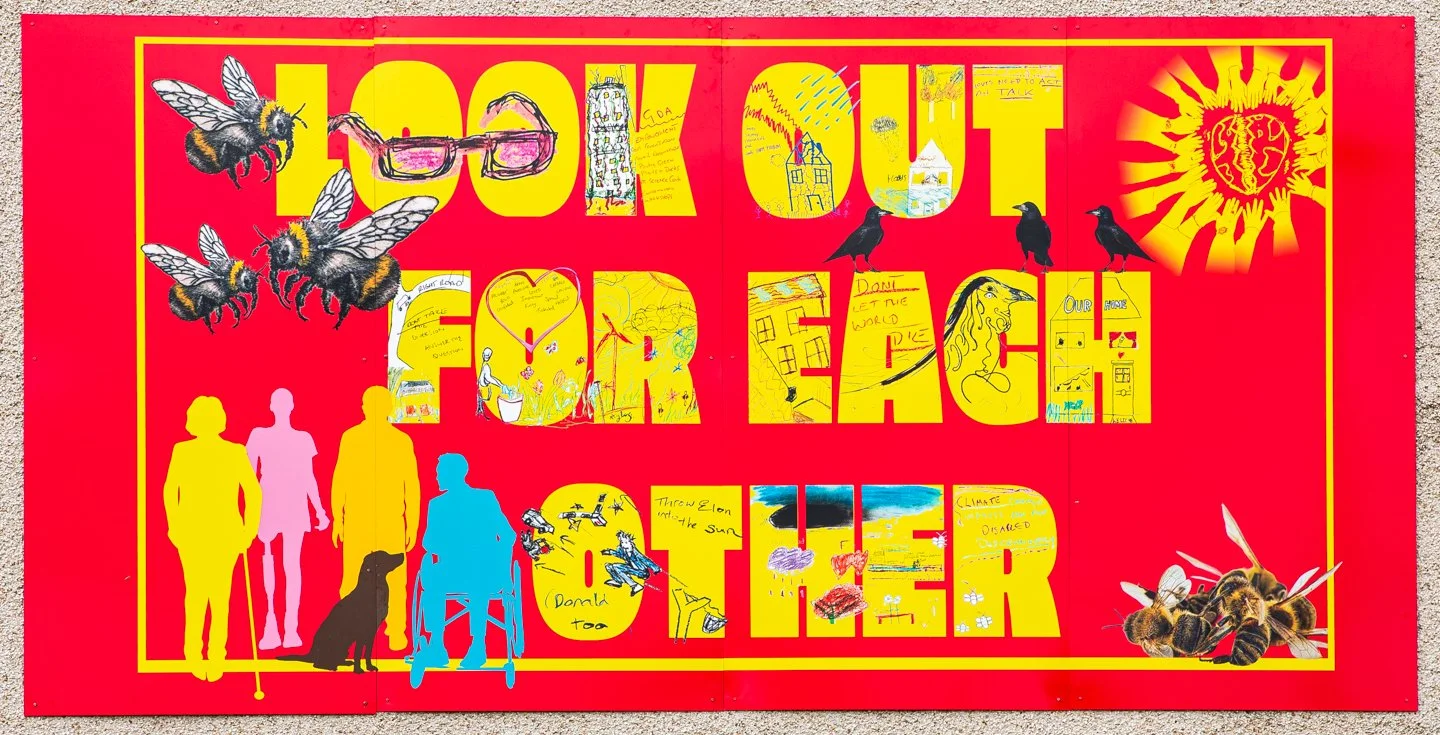
On the outside of the building, there is a large metal mural. The words ‘Look out for each other’ are printed in bold yellow letters on a red background. This provides the most important overall message to the whole population.
Inside the letters there are reproductions of the drawings by the disabled people who contributed to the mural.
On the right, a circle of hands pushes a broken planet back together.
On the left, there are flying bees. Over the word ‘look’ is a pair of glasses, encouraging people to see the world in new ways.
In the bottom left, there are silhouettes of disabled people and a guide dog looking out for each other and working together to create a fairer world.
Outside mural photo
Image credit: Erika Stevenson
Resisting despair, anxiety and guilt by building collaborative sustainable societies of solidarity
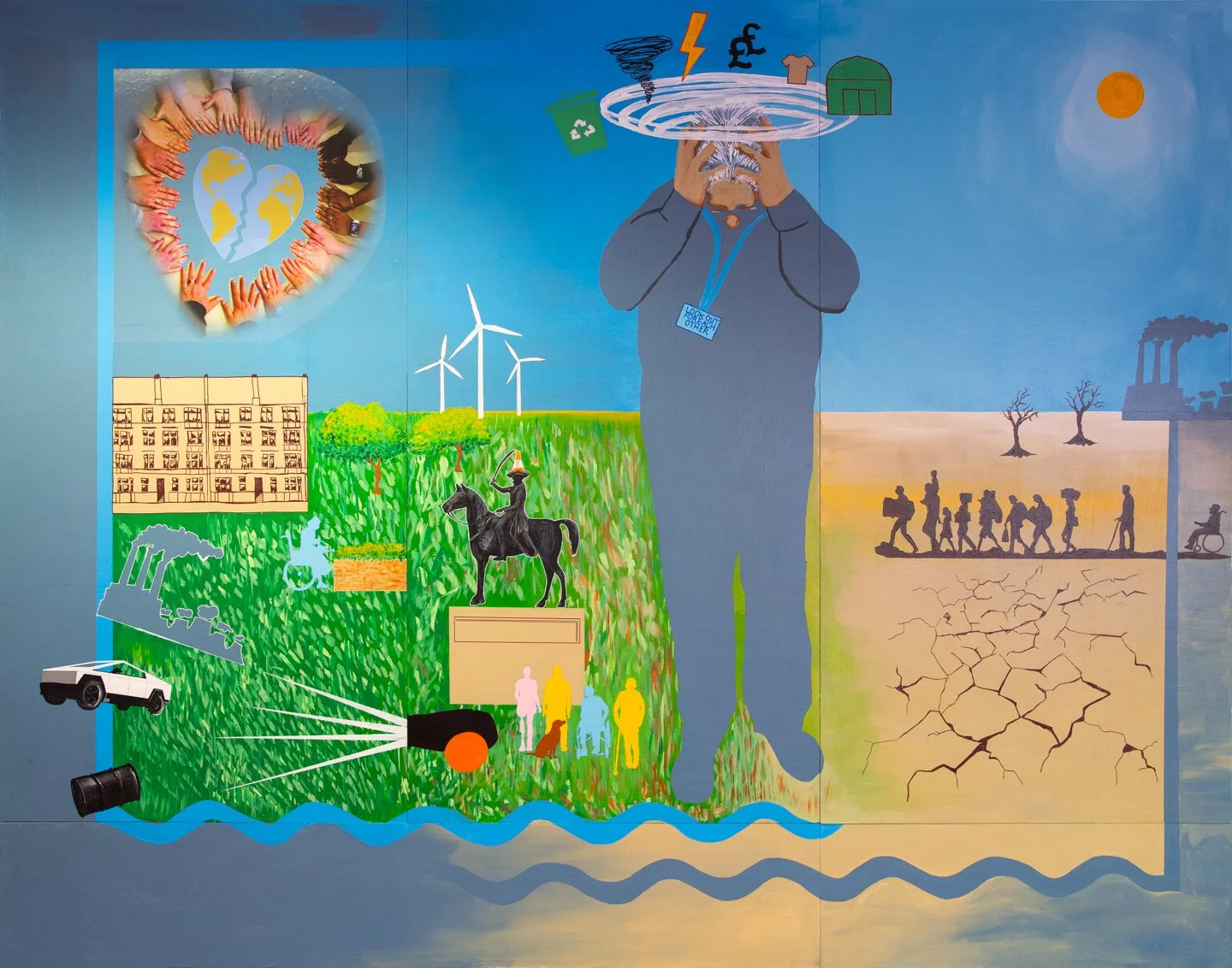
Inside the GESH centre, there is a second mural painted directly onto the wall. On the right of the mural, a group of people are attempting to cross brown parched earth, with a blazing sun and power station in the background. A wheelchair user is at the back of the group, struggling to keep up.
In the middle of the mural, there is a silhouette of a figure, dressed in blue. The person has their head in their hands, surrounded by worries, including the need to earn money, to pay the rent, provide food, clothing and a home. In addition to these immediate worries, there are extreme weather events, and the ever-present calls to recycle. People involved in creating the mural spoke of how climate change and environmental action provide even more things to worry about. They described feeling guilty when they cannot do the environmental actions that others take for granted.
On the left of the mural there are symbols of Glasgow’s people collaborating. The hands of everyone that worked on the mural are pushing a broken, heart-shaped earth together. Below this image, there is a row of traditional Glasgow tenement buildings, as well as the iconic Duke of Wellington statue from Glasgow’s Royal Exchange Square, complete with traffic cone hat. This part of the mural shows that people are working together to create change. Meanwhile, a canon is shooting out the things that people do not want – a fossil fuel power station, one of Elon Musk’s cars and a barrel of oil. These images are set against a flourishing green background.
Indoor mural photo
Image credit: Erika Stevenson
The key messages conveyed by the murals are that we need to look out for each other, to counter anxiety and guilt by working together to build collaborative, sustainable societies of solidarity.